How Directional Drilling Works in New Orleans Ground
The delta deck: young, soft, and honest about it
The metro south of the lake sits on the river's most recent work: soft gray clays, silts, and buried organic layers — old swamp and marsh surfaces — stacked wet and still consolidating. There is no rock story here at any depth a utility will ever visit; the engineering story is softness itself. Bores steer effortlessly and demand buoyancy math in return; organics in an alignment deserve anticipation because they drill differently and settle differently; and everything placed in this ground should be designed for a subsurface that moves slowly forever. Subsidence isn't a defect of the delta — it's the delta being itself, and competent work here plans for it.
North of the lake, the ground changes citizenship: St. Tammany rides older Pleistocene terraces — firmer silts and sands with actual bearing manners — where drilling runs closer to conventional Gulf South practice. The causeway isn't just a commute; it's a geologic boundary, and quotes on either side reflect it.
The protection system is the permit system
Dry land in the urban parishes is manufactured continuously: the federal-and-local levee and floodwall perimeter holds the water out, and the drainage canals and pump stations lift the rain over the wall. For underground work, that system is the regulatory landscape — levee districts and flood-protection authorities reviewing anything near their features, drainage operators governing the canals, and federal interest standing behind the whole perimeter's integrity. The practical translation: crossings in the protection world are engineered submittals with real review timelines, and the schedule that survives is the one that filed early and answered thoroughly.
The sequence, delta edition
The bones are standard — locates plus private designating, potholes on every claimed utility, pilot on profile, ream to about one and a half times the product, pull, restore. Delta bends: pits engineered as shored, pumped structures; product ballasted against ground that floats everything; organics logged and managed in the fluid program; hurricane-season staging discipline on protection-adjacent work; and restoration that honors surfaces from historic banquettes to north-shore lawns.
Who owns what you're crossing
Municipal streets carry their cities' processes; parish public works govern the wider map, eight parishes' worth; DOTD permits the state system, the interstates, and the causeway approaches. The protection world — levee districts, flood-protection authorities, drainage operators — reviews anything near its features, with federal interest behind it; navigation and coastal authorities govern the working waterways; railroads and the port add their corridors; historic districts add their layers in the oldest grids. The quote names every owner on your alignment, and in this metro that list is the project plan.
Straight answers
Will you hit rock on my bore?
No — and that's the honest headline of delta drilling. The cautions all run soft: buoyancy, organics, settlement, and pits that need engineering rather than optimism. The quote prices those real conditions instead of imaginary granite, which is exactly why soft-ground competence is the local credential.
How deep do bores run under New Orleans streets?
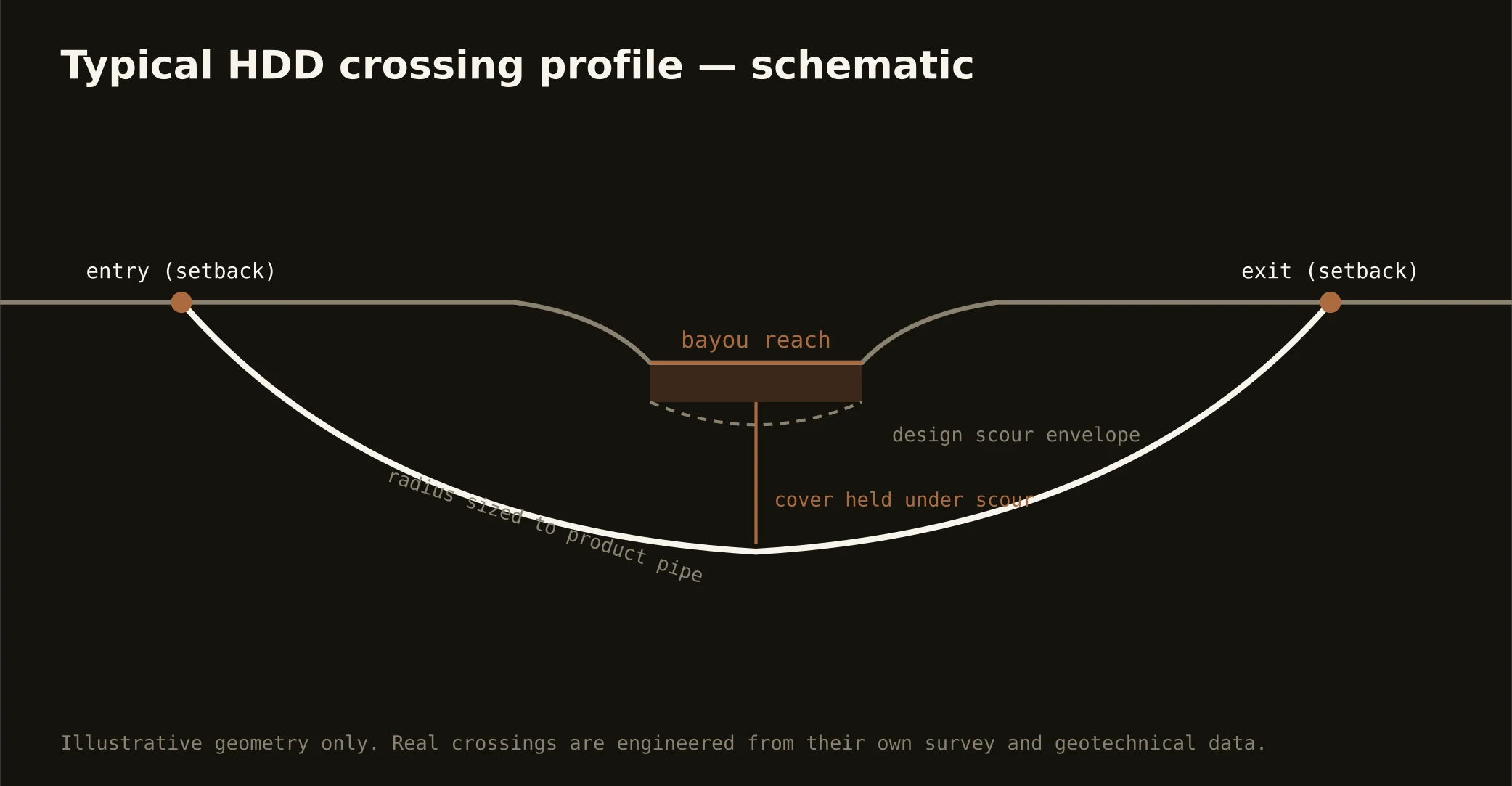
Cover follows the owning authority's standard and sits below everything potholed on the alignment — with protection-world crossings running to the levee or drainage authority's criteria, which govern absolutely. In ground this soft the depth is an engineering choice, and the bore plan states yours before mobilization.
Does hurricane season change the work?
It disciplines it: staging near protection features stays storm-ready, schedules respect the season's logistics, and rebuild surges afterward compress timelines the network's scale is built to meet. The metro plans around its season like the engineering culture it is — the trade that serves it does the same.
Ready to put a number on a real crossing? Send the scope — a person prices it.